
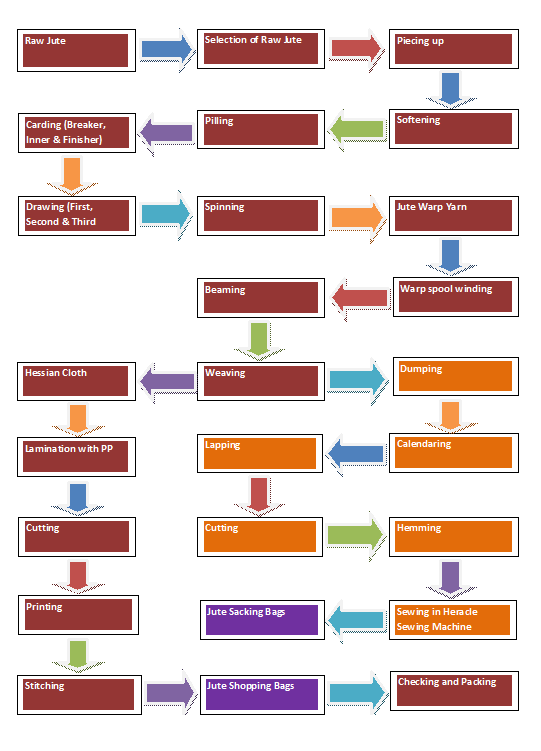
Step 1: Cultivating the Jute Plant
The manufacturing process begins with farming. Jute grows best in warm, humid climates with abundant rainfall and fertile alluvial soil. Farmers typically sow the seeds during the spring and the plants reach maturity in approximately six months.
During the growing season, careful field management helps produce long, strong fibres suitable for high-quality fabric. When the plants reach a height of around 10–12 feet, they are ready for harvesting.
Step 2: Harvesting and Retting
After harvesting, the jute stalks are bundled and immersed in clean water for a process known as retting. This natural process allows microorganisms to break down the material surrounding the fibres, making them easier to separate from the stem.
Depending on water temperature and quality, retting generally takes between 10 and 20 days.
Once retting is complete, skilled workers strip the fibres by hand, wash them thoroughly to remove impurities and hang them to dry naturally. The result is clean, golden-coloured jute fibre ready for further processing.
Step 3: Fiber Processing and Spinning
The dried fibres are transported to a mill, where they undergo several processing stages before becoming yarn.
The fibres are first softened and conditioned with natural oils to improve flexibility. In this stage if low grade oil is used then finished product will have a bad smell and that is unhealthy also. They then pass through carding machines that align the fibres into continuous slivers. Multiple drawing stages ensure the fibres are evenly distributed before they are spun into strong jute yarn.
The quality of this yarn plays a significant role in determining the strength and appearance of the finished bag.
4. Grading of Jute Fiber
Not all jute fibres are equal and grading helps decide pricing and end use (bags, cloth, ropes, etc.).
How grading works
After drying, fibres are classified based on:
- Length (longer = better)
- Colour (bright golden preferred)
- Fineness (thinner fibres are premium)
- Strength (tested by pulling)
- Lustre (natural shine)
Public and private agencies follow strict grading guidelines.
Common jute fibre grades
| Grade | Quality | Characteristics | Common uses |
| TD-1 | Excellent | Extra-long, very strong, bright golden colour, high lustre, very clean, minimal defects | Premium yarn, luxury textiles, high-end export products |
| TD-2 | Very good | Long, strong, uniform, good colour, few defects | Premium shopping bags, fine hessian, quality fabrics |
| TD-3 | Good | Good strength and colour, slightly defects | Quality tote bags, shopping bags, export-grade fabrics |
| TD-4 | Fairly good | Moderate strength, acceptable lustre, some root content | Standard jute bags, packaging fabrics, general-purpose products |
| TD-5 | Fair | Medium-quality fibres, more colour variation and defects | Grocery bags, sacks, packaging cloth |
| TD-6 | Ordinary | Coarser, shorter fibres, noticeable defects | Hessian, sacking cloth, industrial packaging |
| TD-7 | Low | Short, coarse, dull fibres, higher root content | Rope, twine, coarse fabrics, geotextiles |
| TD-8 | Lowest | Very coarse, weak, poor colour, many defects | Low-grade industrial applications, paper pulp, low-value products |
Step 5: Weaving the Jute Fabric
The spun yarn is woven into fabric using industrial looms. Different weaving patterns and fabric weights (GSM) are selected depending on the intended application.
For example:
- Lightweight fabrics are commonly used for promotional tote bags.
- Medium-weight fabrics are suitable for shopping bags.
- Heavy-duty fabrics are ideal for packaging bags and industrial applications.
At this stage, manufacturers carefully monitor fabric consistency, weave quality and strength.
Step 6: Fabric Treatment and Finishing
Depending on customer requirements, the woven fabric may undergo additional finishing processes.
These may include:
- Dyeing in custom colours
- Lamination for improved moisture resistance
- Softening treatments
- Anti-fraying finishes
- Fabric inspection and quality checks
Laminated jute bags are particularly popular for retail and promotional use because they provide additional durability and a smoother surface for printing.
Step 7: Bag Design and Sample Development
Before mass production begins, manufacturers prepare a design based on the customer's specifications.
This stage includes:
- Bag dimensions
- Handle type
- Gusset size
- Fabric weight
- Colour selection
- Printing artwork
- Accessories such as zippers, buttons or inner pockets
A physical sample is often produced for approval before full-scale manufacturing starts. This helps ensure the final product meets the customer's expectations.
Step 8: Cutting and Stitching
Once the design is approved, the fabric is cut according to precise measurements using industrial cutting equipment.
Experienced sewing operators assemble each bag by stitching together the body panels, gussets, handles and any additional features. Reinforced stitching is applied to high-stress areas to improve durability and extend the bag's lifespan.
Attention to detail during this stage ensures every bag is both functional and visually appealing.
Step 9: Custom Printing and Branding
Custom branding transforms a simple bag into a powerful marketing tool.
Manufacturers use various printing methods depending on the artwork, order quantity and design requirements, including:
- Screen printing
- Offset printing
- Heat transfer printing
- Digital printing (for selected applications)
Each printed bag is inspected to ensure accurate colours, sharp graphics and proper logo placement.
Step 10: Quality Inspection
Quality control is an essential part of the manufacturing process.
Each batch is inspected for:
- Fabric quality
- Stitch strength
- Printing accuracy
- Bag dimensions
- Handle durability
- Overall finishing
- Packaging quality
Only products that meet established quality standards proceed to packaging and shipment.
Step 11: Packaging and Export
Finished bags are folded, counted and packed into export-quality cartons.
Depending on customer requirements, packaging may include:
- Barcode labels
- Polybags
- Carton markings
- Custom packaging
- Palletization for container shipments if required
Export documentation, shipping labels and quality certificates are prepared before dispatch to customers worldwide.